

How Is a Custom Bike Made?
Finding a bike that fits should be simple. Pick your frame size, adjust the saddle and handlebars, and start riding. ...
Finding a bike that fits should be simple. Pick your frame size, adjust the saddle and handlebars, and start riding. Yet that process can get frustrating when your body doesn’t match the proportions assumed by standard bike sizing.
You may be tall enough for an XL frame but find the reach too short. Your legs may need a longer crank while your torso needs a shorter cockpit. You might lower the saddle and still feel cramped, or raise the handlebars and end up with a position that never feels quite right. These problems become even harder to solve when you are very tall, very short, or have unusual body proportions or mobility issues.
That is where a custom bike builder takes a different approach. Instead of asking you to adapt your body to an existing frame, the process starts with your measurements, riding position, and goals. You can then select the frame geometry, crank length, cockpit, wheels, and components around those requirements.
| Stage | What Happens |
|---|---|
| Fit | Measurements, proportions, riding goals, and position are established |
| Design | Frame geometry and riding position are developed |
| Components | Cranks, wheels, cockpit, saddle, drivetrain, and other parts are selected |
| Review | The custom design is sent to the rider for approval |
| Build | The approved frame and components are assembled |
| Ride | The finished bike is delivered for its intended use |
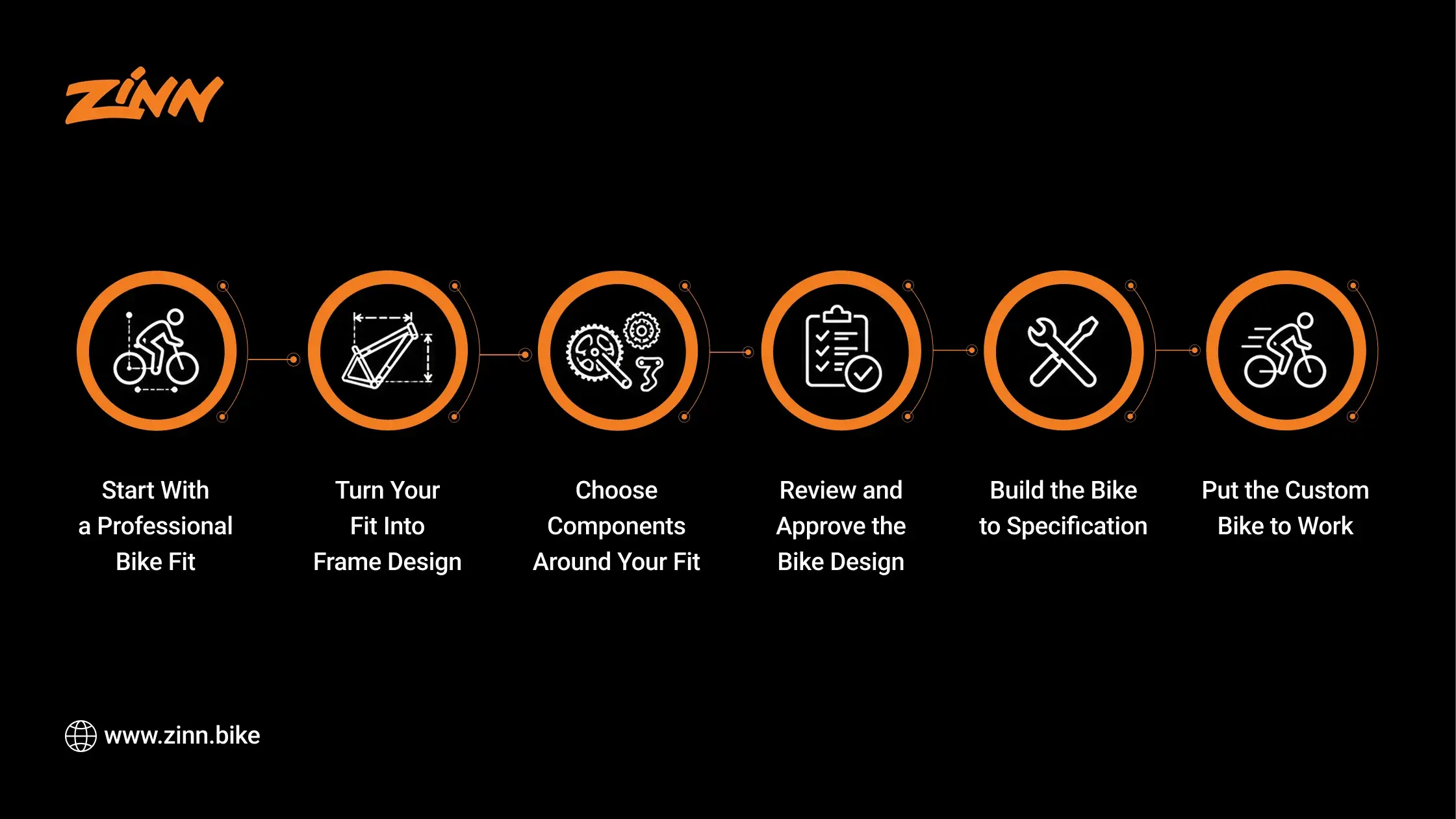
Once you decide to go custom, the process isn’t simply choosing a frame and adding components. Each stage builds on the last, with the rider’s needs guiding decisions from the initial measurements through the finished bike.
The first question is not, “What frame size do you need?”
It is, “What does your body need from the bike?”
A good custom build starts with measurements and a conversation about how you ride. Lennard Zinn, the bike fitter and designer of Zinn Cycles, considers factors such as height, inseam, torso length, weight, riding goals, body mechanics, and preferred riding position before designing the frame.
Height gives a useful reference, but it cannot describe the proportions of an entire body.
Two riders can be the same height while having very different:
This is one reason a custom bike can make sense for riders who consistently find that standard frames fit one part of their body but not another.
A road racer, gravel rider, touring cyclist, and recreational rider do not necessarily need the same position.
Zinn Cycles can tailor the bike for an aerodynamic position or a more comfortable upright posture. Its custom designs can use different top tube lengths and sport or upright geometry based on body proportions and riding preferences.
Once the rider’s measurements and goals are established, they have to become numbers on a drawing.
This is where a custom bike builder earns its name.
Frame geometry determines much of how a bicycle fits and handles. A custom design can account for proportions that a standard size chart cannot fully address.
That can include:
Zinn’s tube selection is based partly on rider weight to balance durability, comfort, and stiffness.
That distinction is particularly useful for very tall or very short riders. Simply enlarging every dimension of a standard frame does not necessarily create the right proportions.
Material selection also happens within the larger design process. The material should support the rider’s intended use rather than being chosen only because it sounds more premium.
A custom bike is not finished when the frame geometry is decided.
The components need to work with that geometry.
Crank length is a good example of where a standard component can create a poor fit.
Most production bikes offer a limited range of crank lengths. Riders with particularly long or short legs may benefit from something outside that range.
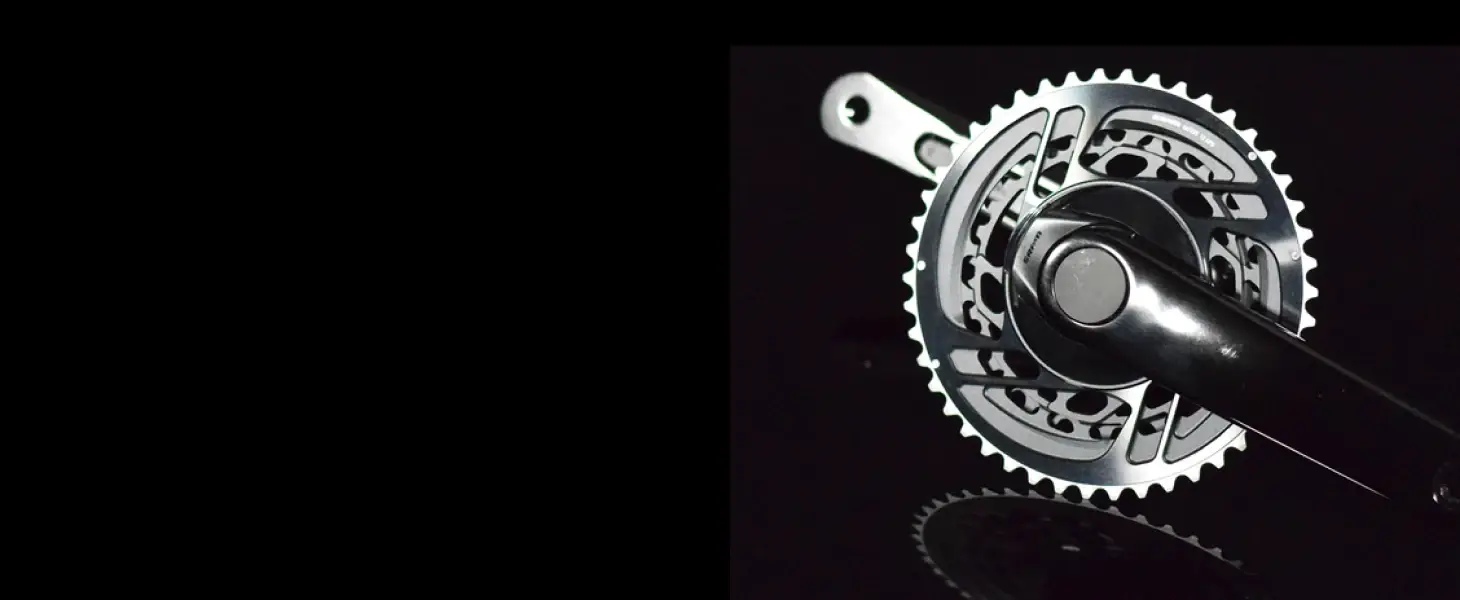
Zinn offers custom road and gravel cranks from 140mm to 210mm, plus shorter options. That lets you consider crank length alongside the rider’s leg length and overall position, rather than treating it as a fixed component.
Wheel size and tire choice also depend on the bike’s purpose.
A road bike designed for fast pavement riding has different requirements from a gravel bike intended for rough surfaces or a touring bike carrying luggage. Rider size can also affect wheel and component selection.
A custom build puts these decisions within the overall design instead of making the rider adapt to one predetermined specification.
The handlebars, stem, saddle, and pedals are the parts the rider interacts with constantly.
Zinn specifically matches components, including crank length, wheels, saddle width, stem, and handlebars, to the rider and riding style.
That matters because changing one component can affect another. A longer stem, for example, changes reach. A different handlebar changes hand position. Saddle width affects how the rider sits on the bike.
A well-designed custom bike treats these choices as part of one system.
Custom does not mean the frame immediately goes into production after you place an order.
After you place your order, the bike fit begins.
Zinn schedules an in-person or remote bike fitting, uses the fit information to create the custom design, and sends it to the customer for approval. Production starts after the customer approves the design.
The design approval gives the rider a chance to review the proposed bike before the frame moves into production.
That is an important difference from simply ordering a bike from a size chart.
The conversation has moved from:
“I need an XL.”
to:
“This is the geometry and riding position being proposed for my body and how I intend to ride.”
That is what makes the custom process a design process rather than a larger version of online bike shopping.
Once you approve the design, the project moves from measurements and drawings to manufacturing.
At this point, the approved design determines what gets built.
The process brings together:
The result is not simply a frame with a custom paint job. The frame dimensions and component selection are tied back to the information collected earlier in the process.
Aesthetics are still part of the custom experience, but they come after the functional decisions.
Zinn offers custom colors and finishes, including anodized graphics for titanium frames, custom paint jobs, and powder-coated finishes. You can also coordinate component accents with the bike’s finish.
That gives the rider plenty of room to make the finished bike personal without confusing appearance with the actual purpose of customization.
The final stage is where all those measurements and design decisions have to make sense.
A custom bike should not feel custom because it looks unusual. It should feel appropriate because the relationship between the rider and the bike makes sense.
That can mean:
None of this means a custom bike automatically solves every discomfort issue. Fit still depends on proper setup, flexibility, riding habits, and other factors. The advantage is that the starting point is designed around the rider instead of requiring the rider to compensate for a fixed frame.
Custom bikes are not only for professional racers or collectors.
They can be particularly relevant to riders who:
Zinn builds custom bikes for riders from 4’7” to 7’5” and also works with cyclists who have specific body mechanics or medical considerations requiring additional customization.
A standard bike asks you to find the frame that comes closest to your body. A custom bike starts with a different question: What should the bike look like if it were designed specifically for you?
That distinction is at the heart of the Zinn custom process. Fit comes first, then geometry, components, manufacturing, and finally the ride. Zinn Cycles has been refining this approach since 1982, with custom bikes designed around rider size, weight, body proportions, riding style, and goals.
If standard bikes have consistently left you between sizes or compromising your riding position, a custom build gives you another route.
The timeline depends on the bike, materials, components, and current production schedule. The process also includes the bike fit and customer approval of the custom design before production begins.
If a production bike genuinely fits your proportions and meets your riding needs, a custom frame may not be necessary. Custom becomes more relevant when standard geometry limits your position, comfort, component choices, or riding goals. For a bike that feels like an extension of your body, you can’t beat a good custom build.
Yes. The geometry and components can be developed around the intended use. A bike designed for fast road riding will have different priorities from one intended for gravel, touring, mountain biking, or relaxed recreational riding.
It depends on the components and the planned build. Compatibility with the frame, drivetrain, wheels, brakes, bottom bracket, cockpit, and other parts needs to be checked before carrying components over to a new frame.
Many components can be replaced or upgraded later, just as they can on a production bicycle. However, frame geometry is determined during the custom design stage, which is why getting the fit and intended use right before production matters.
Finding a bike that fits should be simple. Pick your frame size, adjust the saddle and handlebars, and start riding. ...
A step-through e-bike can make getting on and off the bike easier, but that doesn’t mean every step-through model will ...
If you’re a tall rider, you’ve probably sized up everything on your bike except one part: the cranks. You went with a ...